Multi-Agent Intelligence, Designed for Real Impact.

AI Agent Development & Orchestration

Transformation requires Orchestration.

AI Agent Development & Orchestration
Trusted by global partners, startups and enterprises

AI Agent Development & Orchestration

We design and deploy AI agents that automate complex workflows. But we don't stop there. We orchestrate interactions across systems, teams and customers.
IBM
Our approach unites multi-agent design, human oversight and IBM enterprise-grade infrastructure to help organizations scale intelligence — without the chaos.

Why It Matters

Most automation systems stop at repetition — ours go further.
Without orchestration, AI agents become silos. We build the bridge between human intent and digital execution — fast, consistent and auditable.

AI agents enable contextual decision-making, real-time collaboration and self-optimizing processes that evolve with data.

Our Approach

We combine orchestration frameworks with cognitive design — blending logic, learning and communication.

From single-agent assistants to multi-agent ecosystems, every system we build follows three principles:

Unified Orchestration

Agents don't just work; they collaborate.

Transparency by Design

Full visibility into actions, reasoning and outcomes.

Security First (Secured by IBM)

Enterprise-grade governance, audit and encryption standards (IBM Cloud, ISO 27001, SOC 2, GDPR).

Industries Using AI Orchestration

Finance · Logistics · Healthcare · Public Sector · SaaS Startups
Finance
Logistics
Healthcare
Public Sector
SaaS Startups
Primary KPI
30-60
%

Faster execution speed

40%

Cost reduction on repetitive workflows

Improved accuracy and SLA compliance

Unified real-time dashboards for insights

Key Capabilities

AI-native Workflow Automation

AI-native Workflow Automation

We design workflows that run themselves — transforming repetitive, rule-based actions into self-executing processes that adapt in real time.Example: automating multi-step claims review with validation, approvals and notifications handled by dedicated AI agents.

AI Agent Development & Orchestration

AI Agent Development & Orchestration

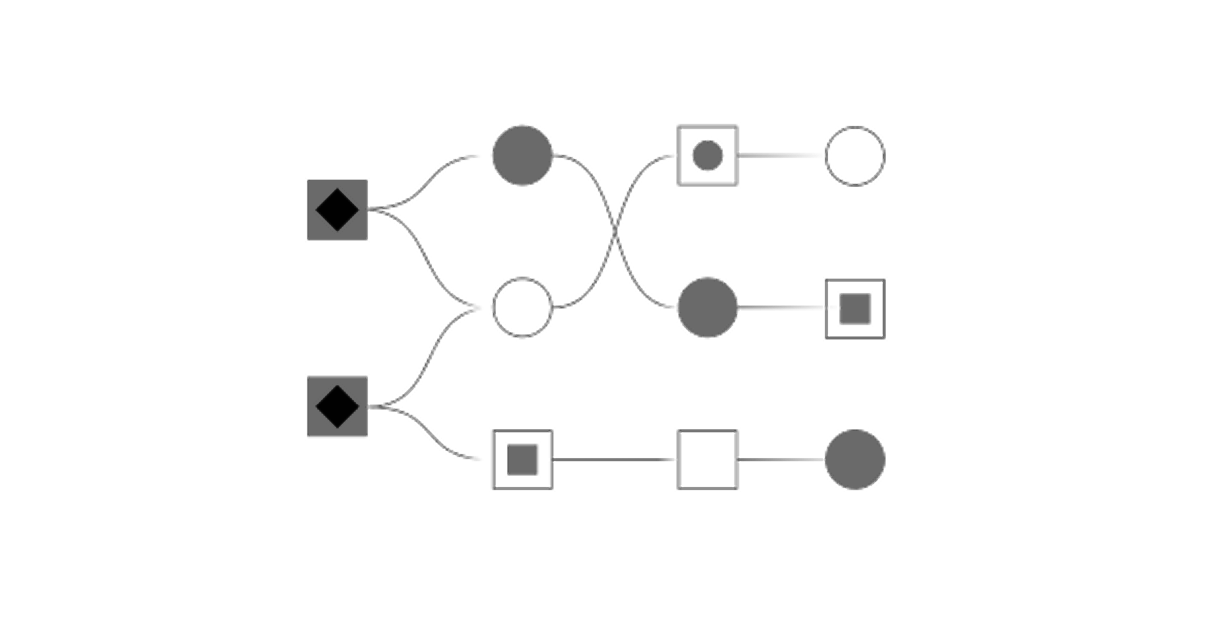
We create specialized agents that collaborate through a central orchestration layer, ensuring accountability, performance and compliance.Example: multi-agent orchestration for financial documentation — extraction, validation and filing handled by coordinated AI agents.

Multi-Agent Integration

Multi-Agent Integration

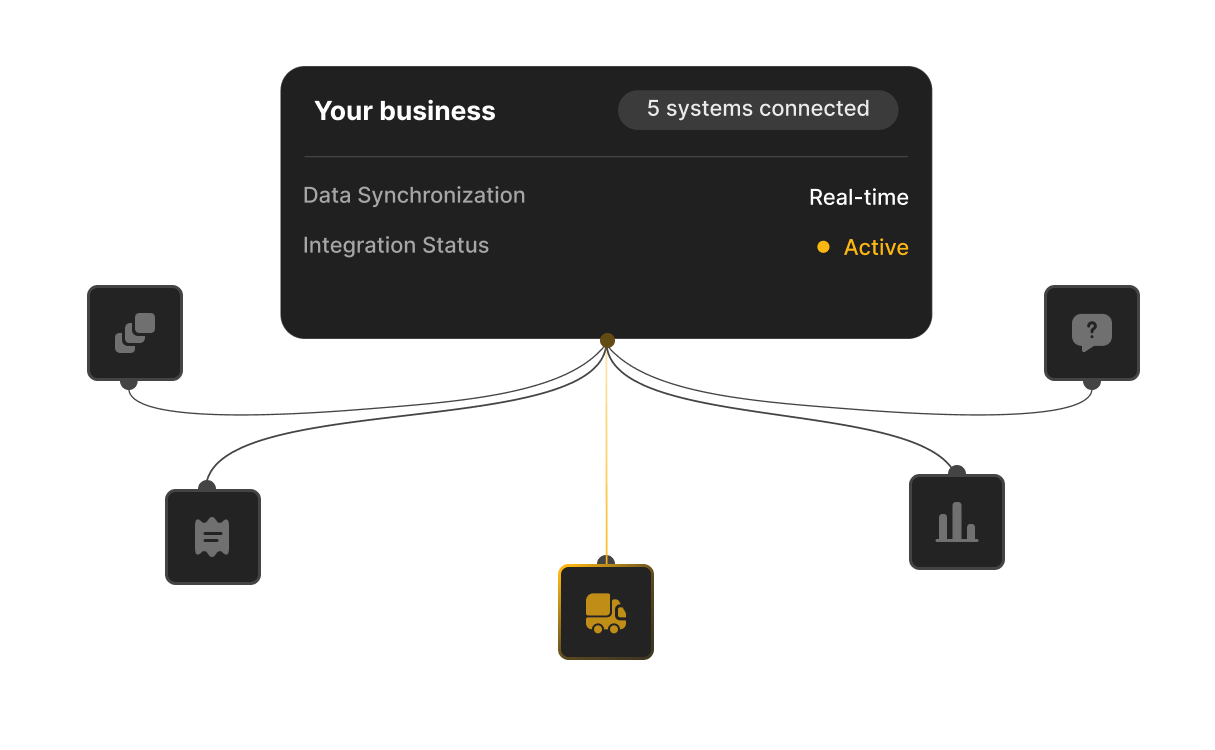
Our orchestration layer connects specialized agents — parsing, analysis and decision-making — synchronized in real time for optimal results.Example: logistics optimization where routing, cost and customs agents coordinate autonomously to create the best delivery plan.

Conversational AI & Omnichannel

Conversational AI & Omnichannel

We build conversational agents for chat, web and CRM that understand context and perform real actions, not just answer questions.Example: multilingual support agent that files claims, updates CRM and escalates exceptions automatically.

Knowledge Base Engineering

Knowledge Base Engineering

We structure, index and optimize knowledge for AI retrieval — ensuring traceable and explainable answers powered by hybrid RAG pipelines.Example: converting 2000+ internal policy documents into a dynamic knowledge graph powering a compliance agent.

Enterprise AI Integration

Enterprise AI Integration

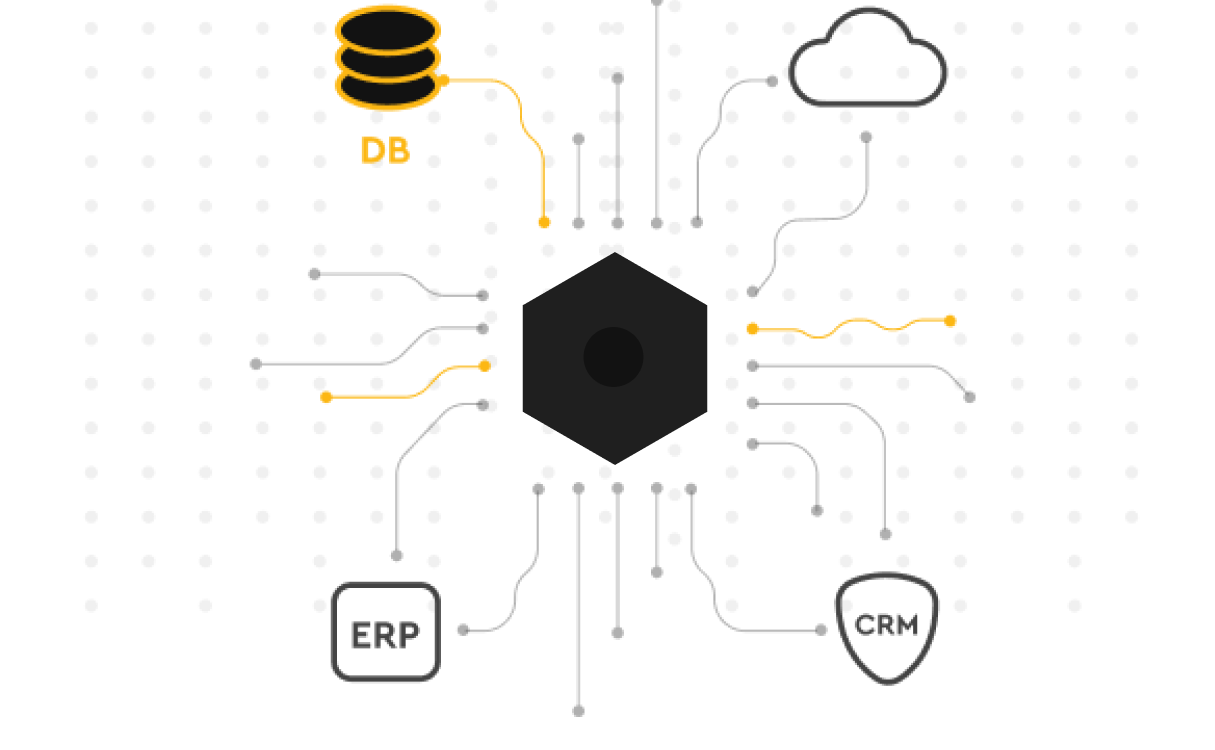
We connect agents securely to your CRMs, ERPs and data systems — ensuring traceability, observability and resilience at scale.Example: connecting healthcare scheduling with EMR, billing and analytics platforms through orchestrated APIs. Secured by IBM.

AI Governance & Compliance

AI Governance & Compliance

We build transparent, auditable AI with access control, explainability and compliance aligned with ISO 27001, SOC 2, GDPR, HIPAA and IBM AI Ethics.Example: compliance-aware orchestration for a government agency with audit logging and PII masking at every touchpoint.

Expert Playbook

When to Use

When to Use

  • Workflows involve repetitive hand-offs between teams or systems.
  • Requests require cross-system context and data retrieval.
  • SLAs demand real-time responses and auditability.
  • Manual coordination limits growth.

Not a Fit If

Not a Fit If

  • Processes aren't standardized or digitally mapped.
  • No API or central data access available.
  • Automation is restricted by heavy regulation (requiring human-only sign-off).

Architecture Choices

Single-Agent + Tools

Single-Agent + Tools

Simple, linear automation.

Multi-Agent System

Multi-Agent System

cross-domain orchestration.

Human-in-the-Loop

Human-in-the-Loop

hybrid model with human validation.

Implementation Path

Discover1–2 weeks

Map workflow, data sources and KPIs

Design2–3 weeks

Define roles, orchestration and data logic

Build3–5 weeks

Implement, test and monitor

Deploy & Optimizeongoing

Pilot, iterate and scale

Field Notes

Real World Evidence
70 %
Airline refunds
Multi-agent orchestration reduced manual case handling by 70%.
Logistics routing
AI agents combined carrier APIs and HS Code logic to auto-select optimal delivery routes.
Legal & Financial operations
AI-driven document orchestration accelerated decision-making and streamlined financial flows across departments.

Security & Compliance

GDPR, ISO 27001, HIPAA Compliant
Secured by IBM Technology
Isolated IBM Cloud or MCP environments
End-to-end encryption, IAM and audit trails
GDPR, ISO 27001, SOC 2 alignment
Optional HIPAA / PCI modules for regulated sectors

Frequently asked questions

What’s new?

Enterprise AI Architecture: How We Connect 10+ Systems Without Breaking Anything
AI Orchestration & Multi-Agent Systems
8 min
Andrei Tereshin

Enterprise AI Architecture: How We Connect 10+ Systems Without Breaking Anything

Enterprise AI integration is no longer about bolting a chatbot onto a legacy stack. It is about system architecture that lets autonomous agents plan, code, review, and ship — across Jira, GitHub, CI/CD, cloud runtimes, and multiple production apps — without a human babysitting every step. In this article I'll walk through the exact architecture we run at EGO Digital to connect 10+ systems, the automation loop that replaced our project managers' and mid-level engineers' routine work, and the lessons from putting it into production on four concurrent products.

The Role of Israeli Tech Companies in Global Enterprise AI Orchestration Leadership: A 2026 Strategic Analysis
AI Orchestration & Multi-Agent Systems
26 min
Slava Girin

The Role of Israeli Tech Companies in Global Enterprise AI Orchestration Leadership: A 2026 Strategic Analysis

TL;DR: Israel has emerged as the global leader in Enterprise AI Orchestration — not by accident, but through a unique combination of military-grade engineering culture, deep-tech talent density, and a government-backed AI strategy. This report breaks down the structural reasons behind this dominance, examines the architectural shift from automation to true multi-agent orchestration, and explores how Israeli platforms like Mashu AI are setting new standards across logistics, finance, and healthcare.

From Chaos to Orchestration: The Architecture Behind NeuroLab
AI Orchestration & Multi-Agent Systems
5 min
Andrei Tereshin

From Chaos to Orchestration: The Architecture Behind NeuroLab

In NeuroLab, AI orchestration is the operating model that makes healthcare AI deployable, auditable, and scalable. NeuroLab is not a single chatbot feature; it is a multi-application system where patient, doctor, admin, and bot channels must stay aligned around one clinical truth. Without orchestration, this quickly becomes fragile. With orchestration, it becomes an architecture.

Let's design the agents that will run your business.

Your systems need more than just automation — they deserve orchestration.
CTA
CTA