Designing Intelligent Processes That Execute, Adapt and Scale.

AI-native Workflow Automation

Eliminate manual bottlenecks. Let your workflows run themselves.

AI-native Workflow Automation
Trusted by global partners, startups and enterprises

Eliminate manual bottlenecks. Let your workflows run themselves.

We design and deploy AI-native workflows that transform repetitive, rule-based operations into self-executing processes. Unlike traditional automation (RPA), our workflows think, adapt and improve — handling exceptions, routing decisions and cross-system actions without human intervention.
IBM
Every workflow we build is secured by IBM technology and designed to integrate seamlessly with your existing infrastructure.

Why It Matters

Manual processes don't scale. Exceptions do.
Most businesses automate the easy 20% — but the remaining 80% of edge cases, approvals and handoffs still require human labor. That's where traditional automation fails. And that's where AI-native workflows begin.

Our approach eliminates the gap between "automated" and "autonomous":

  • Workflows that handle exceptions instead of escalating them.
  • Processes that learn from data instead of following static rules.
  • Systems that coordinate across departments instead of creating new silos.

The result?

Operations that scale without proportionally scaling headcount.

Our Approach

We combine process intelligence with AI orchestration — designing workflows that don't just execute tasks, but make decisions.

Three principles define our methodology:

Process-First Discovery

We map your actual operations (not ideal scenarios) before writing any automation logic. Every workflow starts with understanding where time, money and effort are lost.

Exception-Native Design

Instead of building "happy path" automations that break on edge cases, we design for exceptions first. AI agents handle the 80% of cases that traditional RPA cannot.

Continuous Optimization

Every workflow generates data. We use that data to identify bottlenecks, predict failures and recommend improvements automatically.

Industries Using AI-native Workflow Automation

Aviation · Logistics · Finance · Insurance · Healthcare · E-Commerce · Legal
Aviation
Logistics
Finance
Insurance
Healthcare
E-Commerce
Legal
Primary KPI
70–90
%

70–90% reduction in manual processing time

80%

80%+ straight-through processing rate (no human touch)

60%

60% decrease in process exceptions and errors

3–5xfaster

3–5x faster end-to-end cycle times

Full audit trail and compliance-ready documentation

Key Capabilities

End-to-End Process Automation

End-to-End Process Automation

We automate complete business processes. From trigger to resolution — eliminating handoffs between systems and teams.Example: Automating the entire customer refund lifecycle — from request validation to payment processing to notification — with zero manual steps for standard cases.

Intelligent Document Processing

Intelligent Document Processing

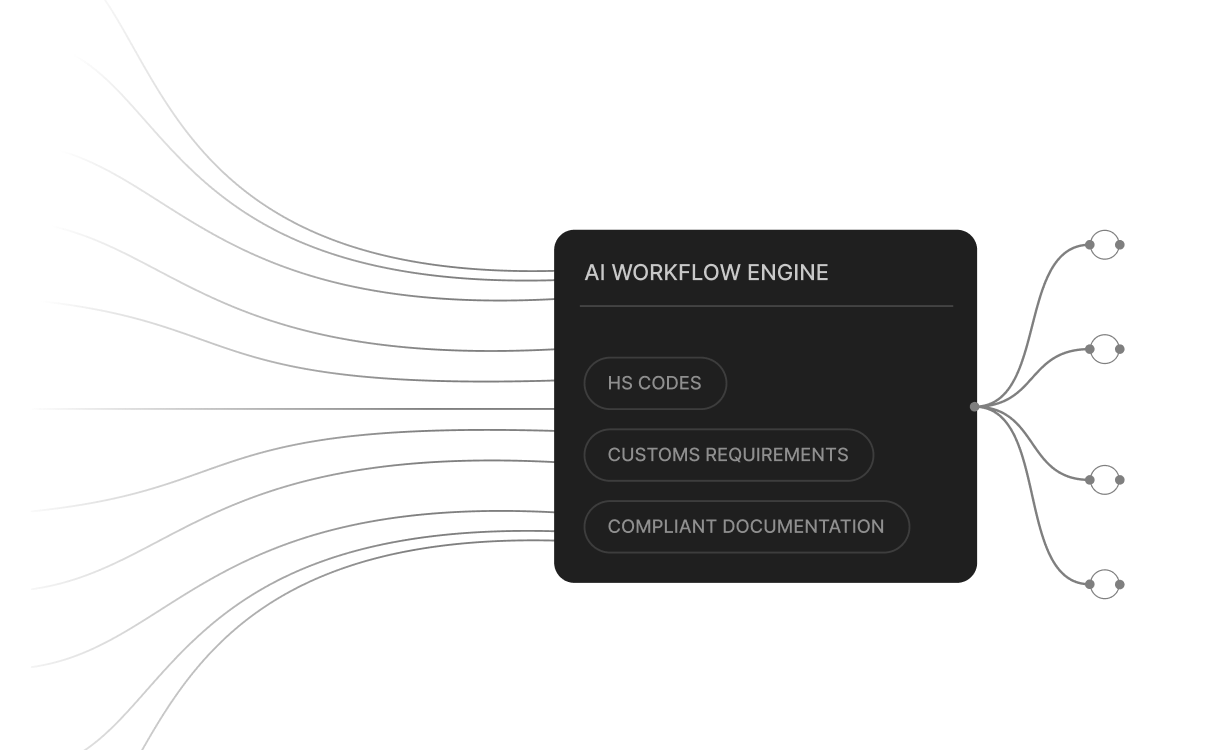
We extract, validate and route information from unstructured documents (invoices, contracts, forms) using AI — not just OCR.Example: Processing thousands of shipping documents daily, auto-extracting HS codes, validating customs requirements and generating compliant documentation.

Decision Automation & Routing

Decision Automation & Routing

We build logic layers that make real-time decisions based on data, rules and AI predictions — routing work to the right system or person instantly.Example: Auto-triaging support tickets by intent, urgency and customer value — resolving simple cases immediately, escalating complex ones with full context.

Cross-System Orchestration

Cross-System Orchestration

We connect fragmented tools (CRM, ERP, email, databases) into unified workflows where data flows automatically and actions trigger across platforms.Example: When a sales deal closes in CRM, automatically updating inventory, generating invoices, notifying logistics and scheduling onboarding — all without manual intervention.

Human-in-the-Loop Checkpoints

Human-in-the-Loop Checkpoints

For regulated or high-stakes processes, we design workflows with strategic human review points — AI prepares, human approves.Example: AI drafts regulatory filings with 90% accuracy; compliance officer reviews and approves in minutes instead of hours.

Workflow Analytics & Monitoring

Workflow Analytics & Monitoring

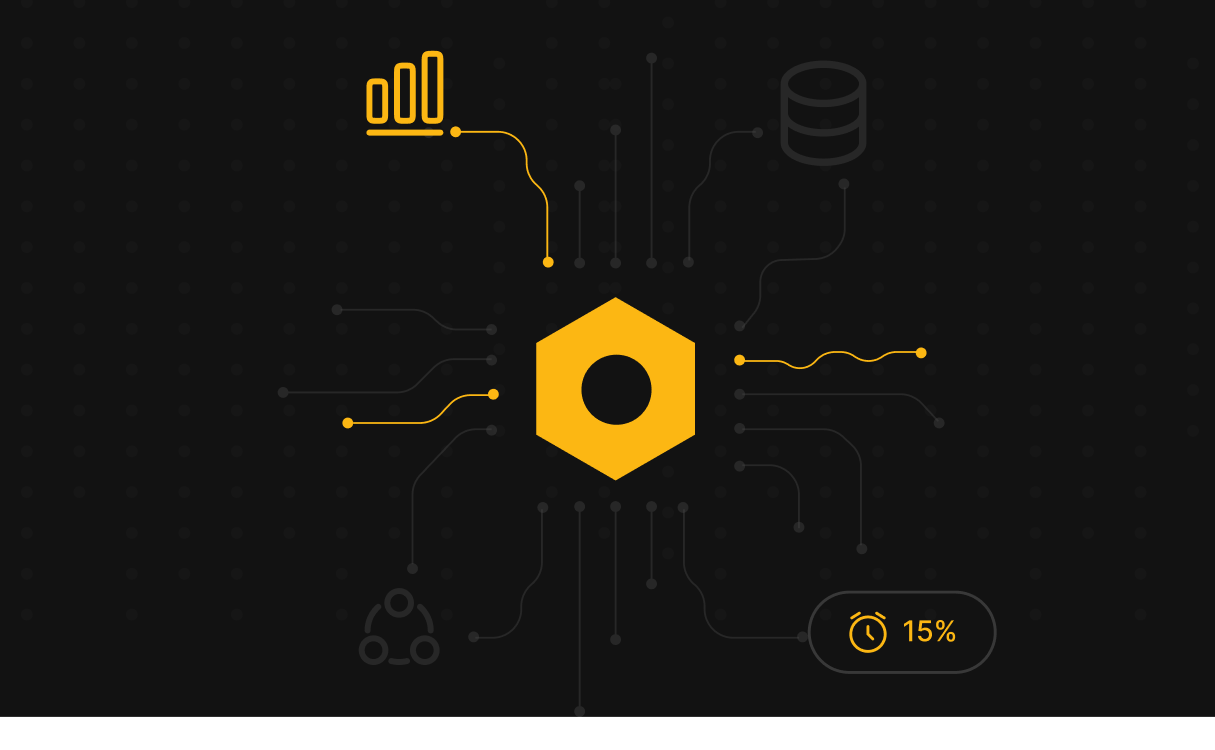
Every automated process includes real-time dashboards showing throughput, exceptions, bottlenecks and optimization opportunities.Example: Operations dashboard revealing that 15% of delays come from a single approval step — enabling targeted process improvement.

Expert Playbook

When to Use

When to Use

  • High-volume, repetitive processes consuming significant labor hours.
  • Workflows with multiple handoffs between systems or departments.
  • Processes with predictable logic but frequent exceptions.
  • Operations requiring audit trails and compliance documentation.
  • Scaling operations without proportionally scaling teams.

Not a Fit If

Not a Fit If

  • Processes are undefined or change weekly (stabilize first).
  • No digital data source exists (paper-only workflows need digitization first).
  • Decisions require complex human judgment with no clear criteria.
  • One-time or rare processes (automation ROI requires volume).

Implementation Path

Discover1–2 weeks

Map current process, identify bottlenecks and exceptions

Design2–3 weeks

Define automation logic, integration points and exception handling

Build3–5 weeks

Develop workflows, connect systems, configure AI components

Deploy & Optimizeongoing

Launch with monitoring, iterate based on real data

Field Notes

Real World Evidence
100 %
EL AL Airlines
AI-powered refund workflow achieved 70% auto-resolution rate, processing requests in under 1 minute and clearing 100% of backlog while maintaining 4.5/5 customer satisfaction.
90 %
Shipper Global
End-to-end logistics automation reached 90%+ workflow automation — from store checkout to customs documentation to carrier selection — eliminating manual data entry across 220+ countries.
90 %
ETGAR (Financial Services)
Regulatory document workflow reduced drafting time by 90%, with AI agents extracting financial data, validating against historical records and generating XBRL-ready filings automatically.
100 %
On Go (Service Platform)
Booking and scheduling workflow automation achieved 100% automated scheduling, reducing customer wait time by 40% and no-show rates by 60%.

Security & Compliance

GDPR, ISO 27001, HIPAA Compliant
Secured by IBM Technology
Isolated execution environments — workflows run in secure IBM Cloud or MCP infrastructure
End-to-end encryption for data in transit and at rest
Full audit logging of every automated action and decision
Role-based access control (RBAC) for workflow management
Compliance-ready for ISO 27001, SOC 2, GDPR, HIPAA

Frequently asked questions

What’s new?

Enterprise AI Architecture: How We Connect 10+ Systems Without Breaking Anything
AI Orchestration & Multi-Agent Systems
8 min
Andrei Tereshin

Enterprise AI Architecture: How We Connect 10+ Systems Without Breaking Anything

Enterprise AI integration is no longer about bolting a chatbot onto a legacy stack. It is about system architecture that lets autonomous agents plan, code, review, and ship — across Jira, GitHub, CI/CD, cloud runtimes, and multiple production apps — without a human babysitting every step. In this article I'll walk through the exact architecture we run at EGO Digital to connect 10+ systems, the automation loop that replaced our project managers' and mid-level engineers' routine work, and the lessons from putting it into production on four concurrent products.

The Role of Israeli Tech Companies in Global Enterprise AI Orchestration Leadership: A 2026 Strategic Analysis
AI Orchestration & Multi-Agent Systems
26 min
Slava Girin

The Role of Israeli Tech Companies in Global Enterprise AI Orchestration Leadership: A 2026 Strategic Analysis

TL;DR: Israel has emerged as the global leader in Enterprise AI Orchestration — not by accident, but through a unique combination of military-grade engineering culture, deep-tech talent density, and a government-backed AI strategy. This report breaks down the structural reasons behind this dominance, examines the architectural shift from automation to true multi-agent orchestration, and explores how Israeli platforms like Mashu AI are setting new standards across logistics, finance, and healthcare.

From Chaos to Orchestration: The Architecture Behind NeuroLab
AI Orchestration & Multi-Agent Systems
5 min
Andrei Tereshin

From Chaos to Orchestration: The Architecture Behind NeuroLab

In NeuroLab, AI orchestration is the operating model that makes healthcare AI deployable, auditable, and scalable. NeuroLab is not a single chatbot feature; it is a multi-application system where patient, doctor, admin, and bot channels must stay aligned around one clinical truth. Without orchestration, this quickly becomes fragile. With orchestration, it becomes an architecture.

Let's design processes that run themselves.

Your workflows should work for you — not the other way around.
CTA
CTA